
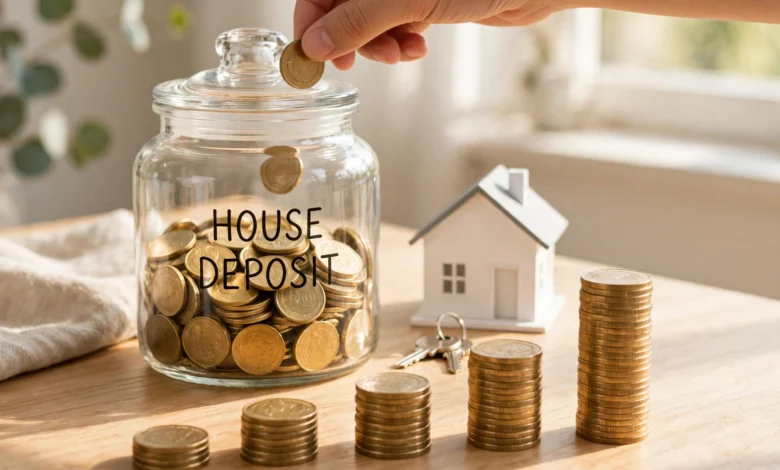
Saving for a house deposit comes down to three things: fix a clear target, automate a fixed amount into a separate account every month, and keep the money in safe cash savings until you need it. A deposit is usually the largest single sum most people ever save, so the plan matters more than willpower. With a target, a timeline, and an automatic transfer, saving becomes a habit instead of a constant decision.
The deposit is the part of the home’s price you pay up front, and the rest is covered by a mortgage. Most buyers aim for 5% to 20% of the purchase price, plus cash for the buying costs: legal fees, surveys, mortgage fees, transfer taxes, and moving costs. This guide walks through each step: how much you actually need, how long it will take, where the money should sit, and how to speed it up.
Step 1: Work Out How Much You Actually Need
The first step is a number, not a feeling. “Save for a deposit” is too vague to act on. “Save $35,000 by a set date” is a plan. Your target has two parts: the deposit itself, and the buying costs on top of it.
The deposit: 5% to 20% of the price
The deposit is a percentage of the property’s purchase price, and the percentage matters because it changes both how much you must save and what mortgage you can get. Here is what each level means on a $300,000 home:
| Deposit | Amount on a $300,000 home | What it usually means |
|---|---|---|
| 5% | $15,000 | Often the minimum lenders accept for a first-time buyer |
| 10% | $30,000 | A common target, with a wider choice of mortgages |
| 15% | $45,000 | Usually unlocks meaningfully better mortgage rates |
| 20% | $60,000 | Usually the best rates and the lowest monthly payments |
A bigger deposit means a smaller loan, a better interest rate, and lower monthly payments, and less risk of owing more than the home is worth if prices dip. But a bigger deposit takes longer to save, so the right percentage is the one that matches your timeline. If you want to buy in three years, 10% may be realistic where 20% is not.
The buying costs on top
The deposit is not the only cash you need. Depending on where you buy, you may also face legal and conveyancing fees, a survey, mortgage arrangement fees, property transfer or stamp taxes, and moving costs. They are easy to forget because they are not part of the headline price, but they still have to be paid in cash.
As a rough guide, allow around $5,000 for these costs on a typical first home, and more if the home is expensive or the taxes are high. Add them to the deposit to get your true target.
A worked example
Take a $300,000 home with a 10% deposit target. The deposit is $30,000. Add around $5,000 for buying costs, and the true target is $35,000. That is the number to save toward, not $30,000, because the extra $5,000 has to come from somewhere, and it is better to plan for it now than to find it at the last minute.
If the same buyer aimed for 5% instead, the deposit would be $15,000 and the target with costs would be about $20,000. If they aimed for 20%, the deposit would be $60,000 and the target about $65,000. The percentage you choose changes the target by tens of thousands of dollars, so pick it before you start saving, not after.
Write the target down and give it a date. A target without a date is easy to postpone; a target with a date turns into a monthly number, which is the next step.
Step 2: Set a Realistic Timeline
With a target in hand, the timeline is simple arithmetic: the target divided by your monthly saving gives the number of months. You have two levers: how much you save each month, and how long you are willing to wait. Raising the monthly amount shortens the timeline; extending the deadline lowers it but delays the purchase.
Here is what the $35,000 target looks like at different monthly amounts:
| Monthly saving | Months to reach $35,000 | Roughly |
|---|---|---|
| $500 | 70 months | About 5 years and 10 months |
| $700 | 50 months | About 4 years and 2 months |
| $1,000 | 35 months | About 3 years |
| $1,500 | 24 months | About 2 years |
The maths is the same whatever your target is. Take your target, divide it by the months until your date, and you have the amount to save each month. If that amount is more than you can afford, you have three honest choices: extend the date, lower the deposit percentage, or look at a cheaper home. What does not work is saving whatever is left at the end of the month and hoping it adds up. It rarely does, because there is usually nothing left.
Pick a date that is ambitious but realistic. Two years at $1,500 a month is demanding; three years at $1,000 a month is the same target with more breathing room. The best timeline is the one you can keep for the whole period, because a plan you abandon in month six saves nothing.
It also helps to set aside money every month automatically, so the saving happens even in a busy month when willpower is low.
You may also like:
| Related Article |
|---|
| Emergency Fund vs Savings Account: What’s the Difference in 2026 |
| How to Budget With Irregular Income: The Freelancer Plan 2026 |
Step 3: Put the Money in the Right Place
Where the deposit money lives matters almost as much as how much there is. The rule is simple: money you will need within a few years belongs in cash-like, capital-stable savings, not in the stock market. The aim is not growth, it is being certain the full amount is there on the day you need it.
A high-yield savings account
The best home for deposit money is usually a high-yield savings account. The money is safe, it earns interest while it waits, and you can reach it when the purchase goes ahead. The interest is a bonus, not the point, but over two or three years it still adds up. Learn how a high-yield savings account pays more interest than a regular one before choosing where to keep the deposit.
A fixed-term savings account
If your timeline is fixed and you will not need the money early, a fixed-term savings account can pay a little more interest for locking the money away. Only use one if you are sure about the date: breaking a fixed term early usually costs the extra interest, and sometimes more.
Why not stocks or funds
Stocks and funds can fall in value, often by 20% or more in a bad year, and a fall can arrive exactly when you are ready to buy. A deposit that was $35,000 in January could be $28,000 by the time you find a home, with no time to wait for it to recover. Investments are for money you will not need for many years; a house deposit is for money you need soon, so it stays in cash.
Keep it in its own account
Use a separate, dedicated account for the deposit, at a different bank if that helps, with no card attached. When the deposit sits in the same account as everyday spending, it gets spent a little at a time without you noticing. A separate account makes the balance visible, the progress real, and the money harder to dip into for anything else.
Step 4: Automate the Saving
The single most reliable way to hit a deposit target is to remove the decision from your hands. Set up an automatic transfer that moves your chosen amount into the dedicated deposit account the day after you are paid. The money leaves before you can spend it, and saving becomes the default instead of the leftover.
This is the “pay yourself first” idea: the transfer happens on payday, before rent, before groceries, before anything optional. A transfer that leaves your account the morning after payday is worth ten good intentions. If you wait until the end of the month to save what is left, there is usually nothing left.
Start with an amount you can keep even in a tight month, then raise it once it feels routine. It is better to automate $500 a month for three years than to automate $1,000, miss two months, and give up. If your pay rises, raise the transfer the same week, before the extra money becomes normal spending.
If your income varies from month to month, automate the lowest amount you can always afford, then add extra manually in good months. The automatic transfer keeps the plan alive in slow months, and the manual top-ups speed it up in good ones.
Review the progress once a month. Check the balance, compare it with the timeline, and adjust if your income or costs have changed. A monthly check takes five minutes and keeps the goal real. A plan you never look at is a plan you quietly abandon.
Step 5: Speed It Up
Once the system is running, you speed it up by widening the gap between what you earn and what you spend. There are two ways to do that: spend less, or earn more. The biggest wins usually come from the fixed costs, not the small treats.
Audit your subscriptions
Go through every recurring payment on your statements for the last few months: streaming, apps, gym, deliveries, memberships. Most people find a meaningful monthly amount hiding in services they barely use. Cancel ruthlessly. You can always re-subscribe after the keys are in your hand.
The big three: housing, transport, food
Small cuts matter, but the big three decide timelines. A modest reduction in rent, such as a smaller flat or a house-share, can double your monthly saving. The same is true of transport, such as a cheaper commute or dropping a car, and food, such as planning meals and fewer takeaways. One structural change beats fifty small sacrifices.
Send windfalls straight to the deposit
Any extra income, a pay rise, a bonus, a tax refund, a side project, or money from selling things you no longer use, should go directly to the deposit before it has a chance to be spent. Windfalls feel like free money, which is exactly why they are so easy to waste. Decide in advance that every windfall goes to the deposit.
Make it a game
Saving for years is hard to stay motivated about, so make the progress visible. A simple chart on the wall, a progress bar in a spreadsheet, or a savings challenge can keep the goal in sight. One popular challenge is the 52-week saving challenge: save $1 in week one, $2 in week two, $3 in week three, and so on until $52 in the final week. After 52 weeks you will have saved $1,378. It will not fund a deposit on its own, but it builds the habit, and the habit is what funds the deposit.
A note for UK buyers
In the UK, first-time buyers aged 18 to 39 can open a Lifetime ISA, which adds a 25% government bonus on top of annual savings, up to £4,000 a year, which means up to £1,000 a year extra toward a house deposit. This is a UK-specific scheme, so it only applies if you are buying in the UK and meet its rules. Check the current rules before relying on it, and do not assume a similar scheme exists where you live.
Keep the Emergency Fund Separate
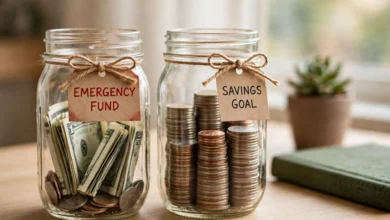
A deposit fund and an emergency fund are not the same thing, and mixing them is one of the most common mistakes. The emergency fund is for true crises: losing a job, a medical bill, a major car repair. The deposit fund is for a planned purchase. If they share one balance, a broken car can quietly eat the deposit, or a house purchase can leave you with no safety net at all.
Build a starter emergency fund of $1,000 first, and keep it separate from the deposit. If you are not sure how the two differ, read how an emergency fund differs from a regular savings account so you can keep the two jobs apart, and keep a separate emergency cushion in its own account, so a surprise never forces you to raid the deposit.
The order is simple: emergency fund first, then the deposit. A holiday can wait a month. A broken car cannot. And a deposit that is raided for emergencies is a deposit that never reaches its target.
Common Mistakes to Avoid
The first mistake is saving without a target. “Save for a deposit” with no number and no date is a wish, not a plan. Work out the deposit, add the buying costs, pick a date, and divide the target by the months. Everything else follows from those numbers.
The second mistake is keeping the deposit in investments. Stocks and funds can drop sharply, often at the worst moment, and a deposit you need in two years has no time to recover. Keep it in cash savings where its value never falls.
The third mistake is saving whatever is left at the end of the month. There is rarely anything left, because spending expands to fill the money available. Automate the transfer for the day after payday, and the saving happens before spending gets a chance.
The fourth mistake is raiding the deposit for other things. A holiday, a new car, or a sale can all feel urgent, but every withdrawal pushes the purchase date back by months. If the money sits in a separate account with no card attached, raiding it takes a deliberate transfer, which stops most impulse spending.
The fifth mistake is forgetting the buying costs. Legal fees, surveys, taxes, and moving costs add thousands of dollars on top of the deposit. A buyer who saves exactly the deposit and nothing else discovers the shortfall at the worst possible moment, when the purchase is already agreed.
The sixth mistake is never reviewing the plan. Income rises, rent changes, and timelines slip. Check the balance once a month, and adjust the amount or the date when life changes. A plan that is never reviewed quietly stops working.
You may also like:
| Related Article |
|---|
| Installment Loans Explained: How They Work, Types and Costs 2026 |
| Beginner Investment Guide: How to Start Investing with Confidence |
Conclusion
Saving for a house deposit is not about finding a secret trick. It is about fixing a clear target, turning it into a monthly number, automating that number into a separate account on payday, and keeping the money in safe cash savings until you need it. On a $300,000 home with a 10% deposit, that means a $35,000 target, and at $1,000 a month it takes about three years.
Done this way, a deposit stops being a distant dream and becomes a date on the calendar. The months pass either way. The question is whether the money is waiting when the right home appears.
Start today. Work out your target, open the separate account, and set up the automatic transfer for the day after your next payday.
FAQs
How much deposit do I need to buy a house?
Most buyers aim for 5% to 20% of the purchase price. On a $300,000 home, that is $15,000 to $60,000. Remember to add around $5,000 for buying costs such as legal fees, surveys, and moving costs on top of the deposit itself.
How long does it take to save for a house deposit?
It depends on the target and the monthly amount. A $35,000 target takes 70 months at $500 a month, 50 months at $700 a month, 35 months at $1,000 a month, and about 24 months at $1,500 a month. Divide your target by your monthly saving to get your own timeline.
Where should I keep my house deposit savings?
In safe cash savings, such as a high-yield savings account or a fixed-term savings account, in a separate dedicated account. Do not keep deposit money in stocks or funds, because the value can fall just when you are ready to buy.
Can I save for a house deposit on a low income?
Yes, but the timeline will be longer, so the plan matters more. Fix a smaller target, such as a 5% deposit, automate even a small amount on payday, cut the big three costs where you can, and send every windfall straight to the deposit. A small amount saved every month still adds up over years.
Should I save for a deposit or build an emergency fund first?
Build a starter emergency fund of $1,000 first, then focus on the deposit while keeping the two funds in separate accounts. A deposit raided for emergencies never reaches its target, and a house bought with no safety net leaves you exposed.
Is 5% deposit enough to buy a house?
A 5% deposit is often the minimum lenders accept for a first-time buyer, so it can be enough to get started. A bigger deposit usually means a better mortgage rate and lower monthly payments, so 10% is a common target, but 5% is better than waiting years for 20% while prices rise.