
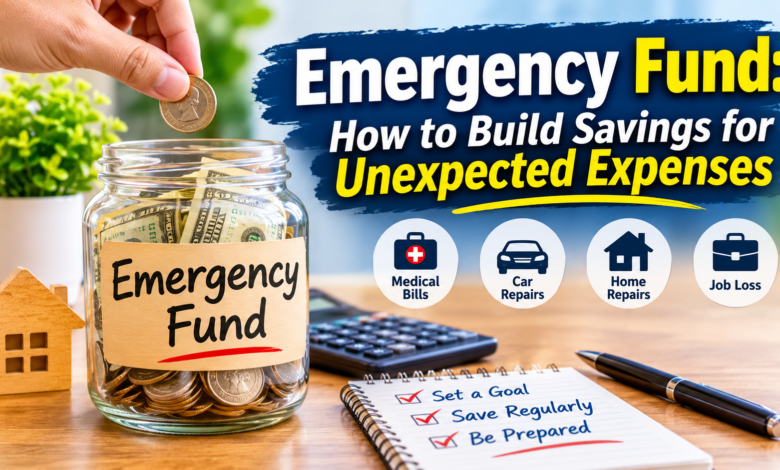
Unexpected expenses can appear at any time, even when everything seems financially stable. A sudden medical bill, car repair, job loss, home maintenance problem, or urgent family expense can put pressure on your monthly budget. Without savings, people often depend on credit cards, personal loans, or borrowed money to manage these situations.
An emergency fund helps you prepare for these unexpected events without disturbing your regular financial plans. It is money set aside specifically for situations that require immediate attention. Instead of worrying about where to find money during a difficult period, you can use your savings to handle the problem.
Building an emergency fund does not require a large salary or a significant amount of money at once. You can start with small contributions and gradually increase your savings as your financial situation improves. The important thing is to develop a consistent saving habit and keep the money available when you genuinely need it.
In this guide, you will learn what an emergency fund is, why it matters, how much you should save, where to keep your money, and how to build savings even when you have a limited income.
What Is an Emergency Fund?
An emergency fund is a separate amount of money reserved for unexpected and necessary expenses. It acts as a financial safety net when something happens that you did not plan for in your monthly budget.
For example, imagine that your car suddenly needs an expensive repair, or you lose your job and need money to cover rent and groceries. An emergency fund allows you to manage these situations without immediately borrowing money or using savings intended for other goals.
Unlike regular savings, which may be used for vacations, shopping, education, or planned purchases, emergency savings should remain untouched until a genuine financial need arises.
The purpose is not to earn high investment returns. Instead, the main priorities are safety, accessibility, and protecting your financial stability.
Why Is an Emergency Fund Important?
Having emergency savings can make a major difference when unexpected financial problems occur. It gives you more control over your money and reduces the pressure of handling urgent expenses.
1. Protects You From Unexpected Expenses
Life does not always follow a predictable schedule. Household appliances can stop working, vehicles can require repairs, and medical expenses may arise without warning.
These situations can become difficult when your monthly income is already committed to rent, bills, food, transportation, and other responsibilities.
An emergency fund provides money for these unexpected costs. Rather than changing your entire budget or borrowing from someone, you can use the savings you have already prepared.
2. Reduces Dependence on Debt
Without emergency savings, many people turn to credit cards, payday loans, or personal borrowing when an urgent expense appears.
Although borrowing can provide temporary relief, it may create additional financial pressure through interest charges, repayment deadlines, and fees.
An emergency fund helps reduce the need for expensive debt. You can handle necessary expenses using your own money instead of creating another monthly payment.
3. Provides Financial Security During Job Loss
Losing a job can affect almost every part of your financial life. Your income may stop, but important expenses such as housing, food, utilities, and transportation continue.
Emergency savings can help cover essential living costs while you search for another job, explore freelance opportunities, or arrange a new source of income.
This financial support also gives you more time to make thoughtful decisions instead of accepting the first available opportunity simply because you urgently need money.
4. Helps You Manage Medical and Family Emergencies
Unexpected medical expenses, urgent travel, and family responsibilities can require immediate financial attention.
Even people with insurance may face deductibles, uncovered treatments, transportation expenses, or other out-of-pocket costs.
Keeping emergency savings available makes it easier to respond to these situations without immediately disturbing your long-term financial goals.
5. Reduces Financial Stress
Money problems can affect your daily routine, sleep, and decision-making. Not knowing how to pay for an unexpected expense can create unnecessary anxiety.
Although an emergency fund cannot prevent every financial problem, it provides a practical backup plan.
Knowing that you have money available for difficult situations can help you feel more confident about your financial future.
How Much Money Should You Save in an Emergency Fund?
The right emergency fund amount depends on your monthly expenses, income stability, family responsibilities, and financial situation.
A common guideline is to save enough money to cover three to six months of essential living expenses. However, this is a general target rather than a fixed rule for everyone.
If you have a stable job, fewer financial responsibilities, and reliable support, you may initially need a smaller reserve. On the other hand, freelancers, self-employed individuals, and people with irregular income may benefit from saving more.
Start by Calculating Essential Monthly Expenses
Before deciding how much to save, calculate the money you need to cover basic living costs.
Include necessary expenses such as:
- Rent or mortgage payments.
- Groceries and essential household items.
- Electricity, gas, water, and internet.
- Transportation and fuel.
- Insurance and necessary medical costs.
- Minimum debt payments.
- Childcare and other essential family responsibilities.
Avoid including optional spending such as entertainment, expensive shopping, vacations, and restaurant visits.
Your emergency fund should be based on the expenses you would still need to pay if your income suddenly decreased.
Understand the Three-to-Six-Month Rule
Once you know your essential monthly expenses, multiply that amount by three or six to estimate your savings target.
For example, if your essential monthly expenses are $2,000, your savings targets could look like this:
| Savings period | Emergency fund target |
|---|---|
| One month | $2,000 |
| Three months | $6,000 |
| Four months | $8,000 |
| Six months | $12,000 |
These figures are examples. Your actual target should reflect your personal expenses and financial responsibilities.
If reaching six months of savings feels difficult, start with one month of essential expenses. You can increase your target gradually as your financial situation improves.
How to Build an Emergency Fund Step by Step
Building emergency savings is easier with a clear plan. You do not need to save a large amount immediately. Focus on manageable steps that fit your income and regular responsibilities.
Step 1: Set a Realistic Savings Goal
Your first task is to decide how much money you want to save.
Instead of choosing an unrealistic target, begin with a smaller amount that you can achieve without missing important bills or taking on additional debt.
For example, your first goal could be saving $500 or one month’s essential expenses. Once you reach that amount, continue working toward a three-month emergency fund.
Breaking a large target into smaller milestones makes progress easier to track and helps you stay motivated.
Step 2: Review Your Monthly Budget
A monthly budget helps you understand where your money goes and identify opportunities to save.
Write down your regular income and compare it with your expenses. Separate necessary costs from optional spending so you can see which areas offer room for improvement.
You may discover that small purchases, unused subscriptions, frequent food deliveries, or unnecessary shopping are taking more money than expected.
You do not need to remove every enjoyable activity from your life. Instead, make a few practical changes and redirect the money you save toward your emergency fund.
Step 3: Start Saving Small Amounts
One of the biggest mistakes people make is waiting until they have enough money to make a large deposit.
You can begin with a small amount, even if it is only $5, $10, or $20 each week. The amount matters less than developing a consistent habit.
For example, saving $25 every week adds up to $1,300 over one year, before any interest.
As your income increases or your expenses decrease, you can gradually raise your contributions.
Step 4: Automate Your Savings
Saving becomes easier when you do not have to make the decision manually every time you receive money.
You can arrange an automatic transfer from your main bank account to a separate savings account. Schedule it for the day you receive your salary or shortly afterward.
This approach helps you treat emergency savings like a regular financial responsibility.
If your income changes every month, you can use a percentage-based approach instead. For example, transfer 5% or 10% of each payment into your emergency fund whenever your income arrives.
Step 5: Save Extra Income
Occasional income can help you build emergency savings faster.
Examples include work bonuses, tax refunds, freelance payments, gifts, overtime earnings, and money received from selling unused household items.
Instead of spending all additional income immediately, consider directing some or all of it toward your emergency fund.
This strategy is particularly useful if your regular monthly budget has very little room for additional savings.
Step 6: Track Your Progress
Monitoring your savings helps you understand whether your plan is working.
You can use a spreadsheet, budgeting application, or simple notebook to record your deposits and current balance.
Set monthly targets and review them regularly. If you miss a contribution, avoid giving up completely. Adjust your next month’s budget and continue saving.
Consistency over time is more important than making every deposit perfectly.
Where Should You Keep Your Emergency Fund?
Choosing the right place for emergency savings is just as important as deciding how much to save.
Your money should be safe, easy to access, and separate from the account you use for everyday spending.
1. High-Yield Savings Account
A high-yield savings account can be a suitable option for people who want to earn interest while keeping their money accessible.
These accounts generally offer higher interest rates than traditional savings accounts, although rates can change over time.
Before opening an account, compare interest rates, minimum balance requirements, withdrawal restrictions, fees, and deposit protection.
2. Regular Savings Account
A regular savings account is another practical choice, particularly if you prefer a simple banking arrangement.
It allows you to separate emergency money from your everyday spending account. Depending on your bank, you may be able to access the funds through online banking, mobile applications, or branch services.
Check the account’s fees and withdrawal conditions before depositing your money.
3. Money Market Deposit Account
A money market deposit account may provide a combination of savings interest and convenient access to funds.
However, features and withdrawal rules vary between financial institutions. Some accounts require a minimum balance or impose restrictions on certain transactions.
Review the terms carefully to make sure the account is suitable for emergency savings.
4. Keep a Small Amount in Cash
Keeping a small amount of cash at home can be useful when electronic payment systems are unavailable or you cannot access your bank account.
However, storing your entire emergency fund as cash is generally not a good idea because it can be lost, stolen, or damaged.
A safer approach is to keep most of your money in an appropriate bank account and maintain a modest cash reserve for immediate needs.
Important: Avoid putting your main emergency fund into volatile investments, stocks, cryptocurrency, or accounts that charge significant penalties for early withdrawals. Money reserved for emergencies should be available when you need it.
Smart Ways to Build an Emergency Fund on a Tight Budget
Saving money can be challenging when most of your income goes toward essential expenses. However, a limited budget does not mean you cannot prepare for unexpected costs.
Reduce Unnecessary Monthly Expenses
Review your spending and look for expenses that can be reduced without affecting your basic needs.
For example, you may be able to cancel unused subscriptions, compare mobile plans, prepare more meals at home, or reduce unnecessary online purchases.
Even small reductions can create extra money for savings.
Use a Separate Savings Account
Keeping emergency savings separate from your everyday account makes it less tempting to spend the money.
Choose an account that is easy to access during genuine emergencies but does not encourage unnecessary withdrawals.
You can also give the account a clear name, such as “Emergency Savings,” to remind yourself of its purpose.
Follow a Percentage-Based Savings Method
If your income changes from month to month, saving a fixed amount may not always be practical.
Instead, choose a percentage of your income that you can afford to save.
For example, you might save 5% of your income during difficult months and increase it to 10% when you earn more.
The percentage should fit your actual financial situation rather than force you to miss essential payments.
Use a Savings Challenge
A savings challenge can make the process more interesting and help you stay consistent.
For example, you could save $5 during the first week, $10 during the second week, and $15 during the third week.
You can also choose a fixed weekly amount that comfortably fits your budget.
The purpose is to build a repeatable habit, not to create financial pressure.
Common Emergency Fund Mistakes to Avoid
Even when people understand the importance of emergency savings, a few common mistakes can reduce their effectiveness.
Setting an Unrealistic Savings Target
Trying to save several months of expenses immediately can make the process feel impossible.
Start with a smaller milestone and increase your target as your financial situation improves.
Using Emergency Savings for Regular Shopping
A new phone, holiday, entertainment purchase, or planned upgrade is not normally an emergency.
Using your fund for non-essential spending can leave you unprepared when a genuine problem occurs.
Keeping All Savings in Risky Investments
Investments can lose value, and some assets cannot be converted into cash quickly without additional costs.
Your emergency fund should prioritize financial safety and accessibility rather than high returns.
Forgetting to Rebuild Your Fund
If you use emergency savings for a necessary expense, your work is not finished.
Once the situation becomes stable, make a plan to replace the money you withdrew. Gradually rebuilding your fund helps restore your financial protection.
Ignoring Inflation and Changing Expenses
The cost of essential goods and services can increase over time.
Review your emergency fund target at least once a year or whenever your rent, household expenses, family responsibilities, or income situation changes significantly.
Emergency Fund vs. Regular Savings: What’s the Difference?
Although both types of savings involve setting money aside, they serve different purposes.
Regular savings are usually intended for planned financial goals, such as purchasing a vehicle, paying education expenses, planning a holiday, or making a home improvement.
An emergency fund is reserved for unexpected and necessary expenses that require immediate financial attention.
For example, if you are saving for a vacation, you should not use that money to pay for an unrelated expense unless necessary. Similarly, using emergency savings for a planned holiday defeats the purpose of maintaining a financial safety net.
Keeping these savings separate makes it easier to manage your financial priorities and avoid spending money reserved for emergencies.
How to Maintain Your Emergency Fund Over Time
Building an emergency fund is an important achievement, but maintaining it requires regular attention.
Start by reviewing your savings balance and comparing it with your current essential monthly expenses. If your living costs increase, your emergency fund target may need to increase as well.
Whenever you withdraw money, record the reason and amount. This helps you understand how your savings are being used and whether your target is still appropriate.
You should also review your savings account occasionally to check its fees, interest rate, access conditions, and deposit protection.
As your financial responsibilities change, adjust your savings plan accordingly. Getting married, having children, purchasing a home, changing jobs, or becoming self-employed may all affect how much emergency money you need.
The goal is to maintain enough accessible savings to handle financial uncertainty without putting unnecessary pressure on your regular budget.
Conclusion
An emergency fund is one of the most useful parts of a healthy financial plan. It protects you from unexpected expenses, reduces your dependence on borrowing, and provides financial support during difficult situations.
You do not need a high income to begin building one. Start by calculating your essential monthly expenses, choosing a realistic savings target, and setting aside a small amount regularly.
Keep your emergency money in a safe and accessible account, avoid unnecessary withdrawals, and rebuild your savings whenever you use them.
Remember that financial security is not created overnight. Small, consistent contributions can gradually develop into meaningful protection for you and your family. The best time to start building an emergency fund is before an unexpected expense arrives.
FAQs
How much money should I have in an emergency fund?
A common recommendation is to save enough to cover three to six months of essential living expenses. Your ideal amount depends on your income stability, family responsibilities, debt payments, and monthly costs. If you are just starting, aim for a smaller initial target and increase it gradually.
Can I build an emergency fund with a low income?
Yes. You can build emergency savings even with a limited income by starting with small contributions. Review your monthly expenses, reduce unnecessary spending where possible, and save a manageable amount whenever you receive income. Consistency is more important than the size of your first deposit.
Should I invest my emergency fund?
Generally, your main emergency fund should not be invested in assets that can lose significant value or take time to sell. A suitable savings account is often a better choice because it prioritizes safety and accessibility. You can invest separately after establishing an adequate emergency reserve.
When should I use my emergency fund?
Use it for unexpected, necessary expenses that cannot reasonably wait until your next paycheck. Examples include urgent medical bills, essential vehicle repairs, sudden job loss, emergency home repairs, and necessary family travel. Avoid using it for planned purchases or everyday entertainment.
Is a three-month emergency fund enough?
A three-month emergency fund can provide a useful financial cushion, particularly for people with stable employment and relatively predictable expenses. However, individuals with irregular income, dependents, or less predictable work may benefit from saving six months or more of essential expenses.
Where is the safest place to keep emergency savings?
A bank savings account with appropriate deposit protection is often a practical option. Look for low fees, easy access, reasonable interest, and clear withdrawal conditions. The best account depends on your country, banking system, and financial needs.
Should I pay off debt or build an emergency fund first?
The right approach depends on your debt interest rates, financial stability, and monthly obligations. Many people benefit from building a small starter emergency reserve while making minimum debt payments. After establishing that basic cushion, they can focus more aggressively on expensive debt while continuing to build longer-term emergency savings.