

Private money lending is when an individual or a private organisation lends money for a real estate deal, instead of a bank doing it. The lender is usually a person with capital to invest, a small private fund, or a family member, and the borrower is usually a real estate investor who needs money fast for a fix-and-flip, a rental purchase, or a short bridge between two deals.
The loan is almost always secured by the property itself. If the borrower does not repay, the lender can take the property through foreclosure, following the rules of the state where the property sits. The lender cares most about whether the deal makes sense: the property value, the repair plan, and the exit strategy. Credit matters less than at a bank, but it is rarely ignored completely.
This guide explains private money lending in plain English: what it is, how it works, what it costs, how it differs from hard money and bank loans, and the pros and cons for both sides. Rates below are typical ranges reported by lending guides, or worked examples labelled as examples — not live offers — and terms vary by lender and US state.
What Is Private Money Lending?
Private money lending is a loan from a private source for a real estate investment. The money comes from a person or a private company lending its own funds, not from a bank’s deposits. The borrower uses it to buy, repair, or hold a property, and repays it over a short term, usually with interest-only monthly payments and one large payment at the end.
It exists because banks are slow and strict: a bank mortgage can take 30 to 45 days, while a private lender can decide in days, because the decision is about one property and one plan. Most private money loans fund fix-and-flip projects, fast rental purchases, new construction, and bridge loans lasting a few months. It is generally not the right tool for buying a home to live in, because consumer mortgage rules are stricter and the cost is much higher.
Private money lending at a glance
| Question | Short answer |
|---|---|
| Who lends the money? | An individual, a family member, or a private fund |
| Who borrows it? | Usually a real estate investor |
| What secures the loan? | The property itself |
| What does it cost? | Often 10% to 20% interest a year, plus points and fees |
| How fast can it close? | Often in days, sometimes in a week or two |
It is less regulated than bank lending, but not unregulated: lenders must follow state usury laws, which limit interest rates, and the rules change from state to state. Check the rules in your state, and get a lawyer to review the documents.
How Private Money Lending Works, Step by Step
Step 1: The borrower finds a deal
The investor finds a property worth buying, usually below market value because it needs repairs or the seller wants a fast sale, and works out the purchase price, repair budget, value after repairs, and profit if the plan works.
Step 2: The borrower prepares a deal package
A deal package is a short presentation of the deal: the property address and photos, the purchase price, the repair budget, comparable sales, the loan amount requested, and the exit strategy — selling the property or refinancing it once repaired and rented. A lender who cannot see a clear exit will not lend.
Step 3: The borrower approaches a lender
The borrower contacts a private lender through their network, a real estate investor group, an agent, an attorney, or a mortgage broker. The lender looks at the deal first and the borrower second: is the property worth enough, is the repair budget realistic, and will the exit strategy work?
Step 4: The lender checks the property
The lender will usually order an appraisal or a broker’s price opinion, check the title for liens and unpaid taxes, and confirm the repair budget. The lender also decides the loan-to-value ratio, or LTV: the loan amount divided by the property value. At 70% LTV on a $200,000 property, the maximum loan is $140,000.
Step 5: Terms are agreed and documents are signed
The two sides agree the interest rate, the term, the points and fees, and the payment schedule. Then a lawyer prepares a promissory note, the borrower’s written promise to repay, and a mortgage or deed of trust, which gives the lender a claim on the property. The documents are signed and recorded, and the money is sent to a title company at closing.
Step 6: The borrower pays, then repays the loan
During the term, the borrower usually pays interest only, once a month, and the principal is not paid down. At the end of the term, the borrower pays the whole principal in one balloon payment, usually from the sale of the property or a refinance. If neither happens, the borrower must ask for an extension or risk foreclosure.
Private Money vs Hard Money vs Bank Loan
People often use “private money” and “hard money” as if they mean the same thing. They are related, but they are not the same, and both are very different from a bank loan.
| Feature | Private money loan | Hard money loan | Bank loan |
|---|---|---|---|
| Who lends | An individual or private fund | A professional lending company | A bank or credit union |
| Based on | The deal and the relationship | The property value, strictly | Credit, income and property |
| Speed | Days to two weeks | Days to two weeks | 30 to 45 days or more |
| Term | 6 to 12 months, up to 5 years | Usually 6 to 24 months | 15 to 30 years for a mortgage |
| Interest rate | Often 10% to 20% a year | Often 10% to 20% a year | Much lower, often single digits |
| Payments | Often interest-only + balloon | Often interest-only + balloon | Monthly principal + interest |
| Best for | Investors with a network and a deal | Investors who need speed, no network | Buying a home to live in |
The key difference is the lender: private money comes from a person lending their own money, with terms negotiated deal by deal, while hard money comes from a company, with more standardised terms. Both look mainly at the property, both are fast, and both cost far more than a bank. A bank loan is the cheapest option, but a bank will not fund a house that needs major repairs or close in a week. That is the gap private money fills: use a bank when you can, and use private or hard money when speed is worth the extra cost.
What Does Private Money Lending Cost?
Private money is expensive compared with a bank loan — that is the trade-off for speed and flexibility. The cost has three parts: interest, points, and other fees.
Interest: the monthly cost
Interest is often quoted at 10% to 20% a year, and many guides say 15% to 20% is commonly quoted. Some sources report lower rates, around 7% to 15%, for strong deals or experienced borrowers. The rate depends on the deal, the property, and the lender, so never trust a single number as “the rate” — get it in writing for your deal. Interest is charged on the amount borrowed and paid monthly as interest only: divide the annual rate by 12 and multiply by the loan amount. The table below shows the monthly payment on a $100,000 loan at three rates. These worked examples do not reduce the loan balance at all.
| Annual interest rate | Monthly interest-only payment on $100,000 |
|---|---|
| 12% | $1,000 |
| 15% | $1,250 |
| 18% | $1,500 |
Points and other fees
Points are upfront fees: 1 point equals 1% of the loan amount, so 2 points on a $100,000 loan is $2,000, paid at closing. Always ask how many points are charged and add them to the interest cost when comparing offers — a loan at 12% with 3 points can cost more over six months than a loan at 14% with no points. There are other costs too — appraisal, title search and insurance, legal fees — and the borrower needs a down payment, because the lender only funds part of the property value. At 70% LTV on a $200,000 property, the maximum loan is $140,000, so the borrower must bring at least $60,000 plus closing costs and repair money.
You may also like:
| Related Article |
|---|
| How to Open a High-Yield Savings Account With $100 in 2026 |
| APR vs APY: What Is the Difference and Which One Matters More? |
A worked example: a fix-and-flip deal
An investor buys a house for $150,000, budgets $40,000 for repairs, and expects to sell it for $250,000. A lender agrees to lend $120,000 at 12% interest-only for 12 months, with 2 points: 12 months of interest is $14,400, plus $2,400 in points and about $3,000 in other costs — about $19,800 in total. If the house sells as planned, the investor repays the loan and keeps the profit. If it sells for $200,000 instead, the profit disappears fast.
Pros and Cons for Borrowers
The biggest advantage for the borrower is speed: a private lender can fund a deal in days, while a bank takes a month or more, and that speed can win the deal. The second is flexibility — the rate, the term, and the fees can all be negotiated. The third is access: borrowers who do not fit bank rules can still get funded if the deal is strong.
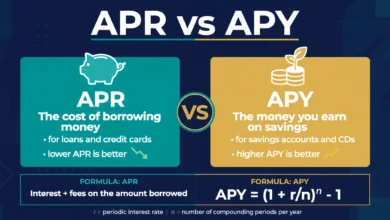
The disadvantages are just as real. First, the cost: interest of 10% to 20% a year, plus points and fees, is far more than a bank charges. Second, the short term: a 6 to 12 month loan leaves no room for delay. Third, the risk to the property: a default can lead to foreclosure. Fourth, the lack of consumer protection: a private loan for an investment property does not carry the same protections as a consumer mortgage. If you are comparing loan costs, it helps to understand how APR is calculated on a loan.
Pros and Cons for Lenders
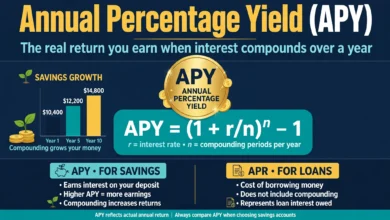
For the lender, the main advantage is return: interest of 10% to 20% a year, plus points, is far more than a savings account pays. To put that in perspective, it helps to know what APY means for savers, because the gap between what savings earn and what private loans charge is the lender’s reward for taking risk. The second advantage is security: the loan is secured by real property. The third is the short commitment, and the fourth is control: the lender chooses which deals to fund.
The risks are serious. The borrower may default, and foreclosure is slow, expensive, and uncertain. The property may be worth less than expected, the repairs may be poor, or the market may fall. Usury laws, licensing rules, and securities laws can also apply depending on the state and the structure of the deal. Lending to friends and family carries a different risk: if the deal fails, the money and the relationship can both be lost. Never lend money you cannot afford to lose, and never without a written agreement and a first lien. Before lending, keep a separate emergency cushion of your own.
How to Find a Private Money Lender
Finding a lender is mostly about relationships. Most private lenders do not advertise. They lend to people they know, or to people introduced by someone they trust.
Start with your own network. Friends, family members, colleagues, and other investors are the most common first lenders. Be honest about the risks, put everything in writing, and never borrow from someone who cannot afford to lose the money. Join a real estate investor association, often called a REIA, and attend local meetups, where many lenders go specifically to find deals.
Ask the professionals around a deal: agents, attorneys, mortgage brokers, title companies, and contractors often know private lenders, because they see these loans close. Use online networks carefully: forums and groups can connect you with lenders, but they also attract scams. Never pay an upfront fee to “unlock” a lender, never send money before documents are signed, and always verify a lender through a lawyer and a title company.
Finally, build a track record. The first loan is the hardest to get; after one successful deal, repaid on time, the second is easier. Keep records of every deal, because that record is your best pitch.
How to Structure the Agreement
A private money loan must be in writing. A handshake deal, even with a friend or family member, is a mistake. The written agreement protects both sides and makes the loan enforceable. A lawyer should prepare or review the documents.
The core document is the promissory note. It states the loan amount, the interest rate, the payment schedule, the term, the late fees, what happens on default, and whether the borrower can repay early. The second document is the mortgage or deed of trust, depending on the state, which gives the lender a lien on the property, recorded publicly, and allows foreclosure if the borrower defaults.
The agreement should also cover the practical details: who pays for insurance, how repair funds are handled, and what happens if the term ends and the property has not sold. Both sides should also agree on communication: the borrower sends regular updates, and the lender responds quickly to draw requests. Most disputes are not about fraud. They are about silence, surprise, and unclear expectations.
Risks and Mistakes to Avoid
The most common mistake for borrowers is borrowing without a real exit strategy. “I will sell it” is not a plan. A plan is: the property will sell for a specific price, based on comparable sales, within a specific time, or it will be refinanced with a specific lender. If neither path is realistic, do not borrow.
The second mistake is underestimating repair costs and time. Repairs almost always cost more and take longer than the first estimate, so add a buffer to both, and never take a 6 month loan for a project that needs 8 months. The third mistake is ignoring the total cost: borrowers who look only at the interest rate forget the points, the fees, and the monthly payments.
The fourth mistake is skipping the legal work: no title search, no insurance, no recorded lien, no lawyer review. The fifth, for lenders, is lending on trust alone, with no appraisal, title check, written agreement, or first lien. The sixth is treating a family or friends deal as informal — those need clearer paperwork, not less. It also helps to set aside money every month so you are not forced to borrow under pressure.
Conclusion
Private money lending is a useful tool for real estate investors who need speed and flexibility that banks cannot offer. A private lender funds a deal based on the property and the plan, closes in days, and charges for that speed with higher interest, points, and a short term. For the borrower, it can win a deal that a bank would lose. For the lender, it can earn far more than a savings account, with the property as security.
But it is not free money, and it is not safe money. The interest is high, the term is short, the balloon payment is real, and a failed deal can cost the borrower the property and the lender the capital. The deals that work have three things in common: a realistic purchase price, an honest repair budget, and a clear exit strategy, written down in an agreement reviewed by a lawyer. Borrow because the numbers work after all the costs, not because the loan is fast.
FAQs
Is private money lending legal?
Yes, in the United States it is legal, but it is regulated at the state level, and lenders must follow state usury laws, which limit interest rates. Check the local rules and get legal advice.
How is private money lending different from hard money lending?
Private money comes from an individual or private fund lending their own money, with terms negotiated deal by deal. Hard money comes from a professional lending company, with more standardised terms. Both are fast, short-term, and secured by property, and both cost far more than a bank loan.
What credit score do I need for a private money loan?
There is no single minimum. Private lenders focus mainly on the property and the deal, so a borrower with a low credit score can sometimes still get funded, but many lenders do check credit and income, and a stronger borrower usually gets a better rate.
How fast can I get a private money loan?
Often in days, sometimes in a week or two, once the lender has seen the deal package and checked the property and title. The exact time depends on the borrower’s documents and how fast the appraisal and legal work come back.
What happens if I cannot repay a private money loan?
The options are to ask for an extension, refinance with another lender, sell the property, or negotiate with the lender. If none of these work, the lender can foreclose and take the property.
You may also like:
| Related Article |
|---|
| Personal Finance Management: A Complete Guide to Managing Your Money |
| Beginner Investment Guide: How to Start Investing with Confidence |