

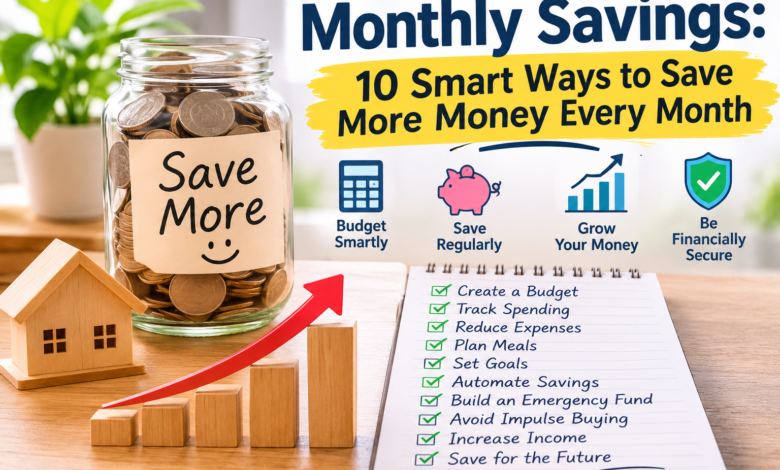
Saving money every month is one of the simplest ways to build a more secure financial future. Whether you earn a regular salary, work as a freelancer, run a small business, or manage a household, developing good saving habits can help you handle unexpected expenses and prepare for important goals. However, saving money is not always easy when rent, groceries, utility bills, transportation, and other everyday costs compete for your income.
The good news is that you do not need a high income to start saving. Small, consistent changes to your spending habits can make a meaningful difference over time. The key is to understand where your money goes, decide what matters most, and create a realistic plan that fits your circumstances.
In this guide, you will discover 10 smart ways to improve your monthly savings, reduce unnecessary expenses, manage your budget, and build financial habits you can maintain over the long term.
What Are Monthly Savings?
Monthly savings are the portion of your income that remains after you cover your expenses or deliberately set aside money before spending it. This money can help you prepare for emergencies, pay for education, purchase a home, start a business, or work toward long-term financial independence.
For example, if your monthly take-home income is 80,000 in your local currency and you save 8,000, your monthly savings rate is 10%. You can calculate this percentage by dividing your savings by your take-home income and multiplying the result by 100.
There is no single savings amount that works for everyone. Your ideal target depends on your income, household responsibilities, debt payments, living costs, and financial goals. A smaller amount saved consistently is often a more realistic starting point than an ambitious target you cannot maintain.
Why Is Saving Money Every Month Important?
Regular saving gives you more control over your finances. Instead of relying entirely on your next paycheck, you gradually build a reserve that can help you manage unexpected bills, temporary income loss, and necessary purchases without immediately borrowing money.
Monthly savings also make larger goals easier to achieve. Saving a fixed amount for several months can help you plan for school fees, travel, home improvements, or a business expense without putting unnecessary pressure on your everyday budget.
Another benefit is reduced financial stress. Knowing that you have money available for emergencies can make it easier to make decisions calmly. Although savings cannot prevent every financial problem, they can give you more options when circumstances change.
10 Smart Ways to Save More Money Every Month
1. Create a Realistic Monthly Budget
A monthly budget is the foundation of an effective savings plan. It helps you understand how much money you earn, where your income goes, and which expenses you can reduce without affecting your essential needs. Without a clear plan, small purchases can gradually consume money you intended to save.
Start by listing your monthly income after taxes, along with fixed expenses such as rent, utilities, loan payments, and transportation. Then estimate variable expenses, including groceries, clothing, eating out, and entertainment. Compare the total with your income to identify how much you can realistically save.
For example, someone earning 60,000 per month might spend 25,000 on housing, 15,000 on food and household needs, 8,000 on transportation and utilities, and 7,000 on other expenses. That leaves 5,000 available for savings, assuming these figures cover all relevant costs.
Review your budget at the end of each month and adjust it when necessary. A budget should reflect your real life, not an ideal situation that is difficult to maintain. For a practical starting point, see the budgeting guidance from Consumer.gov.
consumer.gov
2. Pay Yourself First
One common savings mistake is waiting until the end of the month to save whatever money remains. This approach often fails because unexpected expenses and everyday purchases can use up the available balance before you have a chance to set anything aside.
A better strategy is to pay yourself first. As soon as your income arrives, move a planned amount into a separate savings account before spending on nonessential items. Start with an amount you can afford, even if it is only a small percentage of your income.
Suppose your monthly income is 50,000 and you decide to save 5%. That means setting aside 2,500 each month. If you maintain this habit for 12 months, you will have contributed 30,000 before any interest or investment returns.
The most important part is consistency. You can increase your contribution when your income grows or your expenses fall. The Federal Deposit Insurance Corporation also recommends setting specific goals and saving regularly.
FDIC
3. Track Your Daily Spending
You cannot easily improve your savings habits if you do not know where your money is going. Tracking daily spending helps reveal patterns that may be difficult to notice when you look only at your bank balance.
Record your purchases for at least 30 days. Include groceries, transport fares, online orders, subscriptions, snacks, takeaway meals, and small cash payments. You can use a spreadsheet, a budgeting app, or a simple notebook to keep everything organized.
At the end of the month, group your expenses into categories and identify where you are spending more than expected. You might discover that several small purchases each day cost more than one of your regular bills. The goal is not to eliminate every enjoyable expense but to make sure your spending matches your priorities.
For instance, reducing unnecessary spending by 100 per day would free up approximately 3,000 over a 30-day month. You could redirect that amount toward emergency savings, debt repayment, or another financial goal.
4. Reduce Unnecessary Monthly Expenses
Recurring expenses deserve special attention because they continue taking money from your income month after month. A subscription you rarely use, an expensive mobile package, or a service with features you do not need can quietly reduce your ability to save.
Review your bank statements and payment history to identify subscriptions, memberships, delivery fees, and other repeat charges. Cancel services you no longer use and compare available alternatives before renewing expensive plans. When possible, negotiate a lower price or switch to a suitable, less expensive option.
You can also look at household spending. Turn off unused lights, avoid wasting water, plan meals around food already in your kitchen, and compare prices before buying regular household supplies. These changes may seem small individually, but the savings can accumulate over time.
Imagine you cancel a subscription costing 800 per month and reduce your phone and delivery expenses by another 1,200. You would free up 2,000 monthly, or 24,000 over a year, provided those reductions remain in place. Move the money into savings instead of allowing it to disappear into other purchases.
5. Plan Your Meals and Grocery Shopping
Food is an essential expense, but unplanned shopping can make it more expensive than necessary. Buying groceries without a list, ordering takeaway frequently, and allowing fresh food to spoil can all increase your monthly spending.
Before shopping, check what you already have at home and prepare a simple meal plan for the coming week. Build your shopping list around affordable, nutritious foods that you regularly use. Compare unit prices where possible, and avoid purchasing large quantities of perishable products simply because they appear cheaper.
Cooking at home more often can also reduce the additional costs associated with delivery fees, restaurant service, and convenience purchases. You do not have to stop eating out completely. Instead, decide how much you can comfortably spend on restaurant meals and include that amount in your budget.
For example, if you replace four takeaway meals costing 700 each with home-prepared meals costing 350 each, you could save 1,400 per month. Your actual savings will depend on local prices, portion sizes, and the meals you choose, but planning ahead makes these differences easier to identify.
6. Set Clear and Achievable Savings Goals
Saving becomes easier to maintain when you know what you are working toward. A general intention to save more money may not provide enough motivation, especially when an immediate purchase seems more attractive than a distant financial benefit.
Choose specific goals and give each one a target amount and a time frame. You might want to build an emergency fund, pay education expenses, replace an old appliance, save for a holiday, or prepare for a future home purchase. Break each goal into smaller monthly contributions so that the target feels manageable.
For example, if you want to save 36,000 in 12 months, you need to contribute 3,000 each month. If that amount is too high for your current budget, extend the deadline or reduce the target rather than abandoning the plan altogether.
It can also help to separate savings into different categories. An emergency fund should serve a different purpose from money reserved for a planned purchase. Keeping these goals distinct makes it easier to track progress and avoid spending money intended for an important future need.
7. Automate Your Monthly Savings
Automation can make saving easier because it reduces the need to remember to transfer money every month. Depending on your bank and account features, you may be able to schedule a recurring transfer from your everyday account into a dedicated savings account.
Choose a transfer date that matches your income schedule. For someone paid monthly, a transfer shortly after payday may work well. People who receive weekly or irregular payments can set smaller contributions that reflect when money actually arrives.
Before setting up automatic transfers, check your expected bills and account balance. A transfer that occurs before rent or another essential payment could leave you short of money or lead to fees, depending on your account terms. Choose a sustainable amount and review the arrangement when your income or expenses change.
For example, automatically transferring 1,500 each month would produce 18,000 in contributions over a year, excluding interest. You can increase the amount gradually as your budget improves. The Consumer Financial Protection Bureau explains how regular contributions and automatic transfers can help people build emergency savings.
8. Build an Emergency Fund
An emergency fund is money reserved for unexpected financial problems, such as urgent medical costs, necessary home repairs, vehicle breakdowns, or a temporary loss of income. Without this reserve, an unexpected expense may force you to borrow money or use funds intended for another important goal.
Start with a manageable target based on the expenses you are most likely to face. Your first milestone might be enough to cover one smaller emergency. Once you reach it, work toward a larger reserve that reflects your essential monthly costs, income stability, household responsibilities, and access to other support.
A commonly used longer-term target is three to six months of essential living expenses, although the right amount depends on individual circumstances. If your income is unpredictable or other people depend on your earnings, you may want a larger reserve. If saving is currently difficult, begin with a smaller amount and build gradually.
Keep emergency money somewhere reasonably safe and accessible, such as an appropriate bank savings account. Check account fees, withdrawal conditions, and any applicable deposit-protection rules in your country. Avoid putting money needed for immediate emergencies into investments that can fluctuate in value or may be difficult to access quickly.
9. Avoid Impulse Buying and Unplanned Purchases
Impulse buying happens when you purchase something without considering whether you need it, can afford it, or have a better use for the money. Online shopping, limited-time promotions, and social media advertisements can make unnecessary spending particularly tempting.
One effective method is to introduce a waiting period before making nonessential purchases. For inexpensive items, wait 24 hours. For larger purchases, consider waiting several days while comparing prices and reviewing your budget. This gives you time to decide whether the item is genuinely useful or simply attractive in the moment.
You can also remove shopping apps from your home screen, unsubscribe from promotional emails, and avoid saving payment details on websites where you frequently make unplanned purchases. These small changes create a little more distance between wanting something and buying it.
For example, suppose you regularly spend 4,000 per month on items you later realize you did not need. Cutting that spending in half would free up 2,000 each month. Transfer the difference into your savings account so that avoiding unnecessary purchases produces a visible financial benefit.
10. Increase Your Income and Save Extra Money
Reducing expenses is useful, but there is a limit to how much you can cut from a budget. If your essential expenses already consume most of your income, increasing your earnings may be a more practical way to improve your monthly savings.
Depending on your circumstances, you might explore freelance work, tutoring, selling products, offering a professional service, or developing a skill that could qualify you for better-paid opportunities. Choose an approach that fits your available time, experience, and responsibilities. Additional work should also account for any related costs, taxes, and other obligations.
Whenever you receive extra income, decide in advance how much will go toward savings. This could include a work bonus, a payment from a side project, a gift, or money earned from selling unused belongings. You do not need to save every extra amount, but setting aside a planned portion can speed up your progress.
For instance, if you earn an additional 6,000 in one month and save half, you add 3,000 to your financial reserve without changing your regular savings contribution. Over time, combining a steady savings habit with occasional extra contributions can help you reach your goals sooner.
How Much Should You Save Every Month?
There is no universal amount that everyone should save. Your target should reflect your take-home income, essential expenses, existing debt, family responsibilities, and upcoming financial needs. A useful starting point is to calculate how much you can set aside without missing essential payments or relying on expensive borrowing.
Some people use the 50/30/20 budgeting guideline as a starting framework. Under this approach, approximately 50% of take-home income goes toward needs, 30% toward wants, and 20% toward savings and debt repayment. These percentages are guidelines rather than strict rules, and they may not work for people facing high housing costs, low incomes, or significant financial obligations.
Consider the following illustrative monthly savings targets.
| Monthly take-home income | Savings at 5% | Savings at 10% | Savings at 20% |
|---|---|---|---|
| 30,000 | 1,500 | 3,000 | 6,000 |
| 50,000 | 2,500 | 5,000 | 10,000 |
| 80,000 | 4,000 | 8,000 | 16,000 |
| 100,000 | 5,000 | 10,000 | 20,000 |
These are examples, not recommended targets for every household. All amounts are expressed in the same unspecified currency.
If you cannot save 10% of your income right now, start with 1% or 2% and increase it when your circumstances allow. A realistic plan that you follow consistently is more useful than a demanding target that leaves you unable to cover necessary expenses.
A Simple Monthly Savings Plan You Can Follow
You do not need a complicated financial system to begin. A straightforward routine can help you turn your intentions into a habit and make it easier to see whether your efforts are working.
At the beginning of the month
Write down your expected income, essential bills, debt payments, and savings target. Set aside your planned contribution when your income arrives, if your budget allows.
During the month
Track daily spending, compare grocery prices, avoid unnecessary purchases, and check that essential bills are covered. Adjust your spending when you notice a problem.
At the end of the month
Compare your actual spending with your budget. Record how much you saved, identify any unexpected costs, and set a realistic target for the next month.
For a simple calculation, suppose your monthly income is 50,000, your total spending is 45,000, and you save the remaining 5,000. If you maintain that contribution for 12 months, you will save 60,000 before any interest or returns.
If you later reduce unnecessary expenses by another 1,000 each month and direct that money toward savings, your annual contributions could increase to 72,000. This example assumes your income and other expenses remain stable.
The key is to review your progress regularly rather than expecting every month to go perfectly.
Common Monthly Savings Mistakes to Avoid
Even a good savings plan can become difficult to maintain when it is based on unrealistic expectations or ignores important financial needs.
One common mistake is setting a savings target that is too high. Saving aggressively for a short time may leave you short of money for essential expenses, leading you to withdraw what you saved or borrow to cover the difference. Start with a manageable amount and increase it gradually.
Another mistake is treating emergency savings as money for routine shopping. Planned expenses such as annual insurance payments, school fees, and holiday costs should ideally have separate savings categories. This helps preserve your emergency fund for genuine unexpected needs.
You should also avoid ignoring high-interest debt while building savings. Depending on interest rates, minimum payments, and your circumstances, reducing expensive debt may improve your financial position more than building a large cash balance. At the same time, keeping some accessible emergency money can help prevent a new unexpected expense from creating additional debt.
Finally, do not assume that every savings product is equally suitable. Compare fees, withdrawal restrictions, interest rates, risks, and applicable protections before choosing where to keep your money. Be cautious of offers that promise unusually high or guaranteed returns without clearly explaining the risks.
Conclusion
Monthly savings are not just about spending less money. They are about building a financial routine that helps you manage everyday expenses, prepare for unexpected events, and work toward the future you want.
Start with a realistic budget, track your spending, set clear goals, and make saving a regular part of your income routine. Then look for practical opportunities to reduce recurring costs, avoid impulse purchases, and increase your earnings when possible.
You do not need to change every financial habit at once. Choose two or three strategies from this guide and begin applying them this month. As your circumstances improve, adjust your savings target and keep building on your progress.
FAQs
1. What is the easiest way to start saving money every month?
Start by reviewing your income and essential expenses, then choose a small amount you can save consistently. Transfer that amount into a separate savings account when you receive your income, and review your progress every month.
2. How can I save money every month on a low income?
Focus first on essential spending, affordable meal planning, unnecessary subscriptions, and avoiding impulse purchases. Save a small amount whenever possible, even if it varies from month to month. If your essential expenses already exceed your income, focus on addressing that shortfall and exploring realistic ways to increase earnings.
3. Is it better to save weekly or monthly?
Both approaches can work. Monthly saving may suit people with regular monthly salaries, while weekly contributions may be easier for people paid weekly or managing irregular income. Choose a schedule that matches your cash flow and helps you cover bills on time.
4. How much money should I have in an emergency fund?
A common longer-term goal is three to six months of essential living expenses. However, your needs may differ depending on job security, household responsibilities, income stability, and access to other financial support. Start with a smaller milestone if the full amount feels out of reach.
5. How can I stay motivated to save money?
Set a specific goal, track your progress, and celebrate milestones in ways that do not undermine your budget. Reviewing your growing savings balance can help you see the value of your efforts. If you miss a target, adjust the plan and continue rather than abandoning it.